
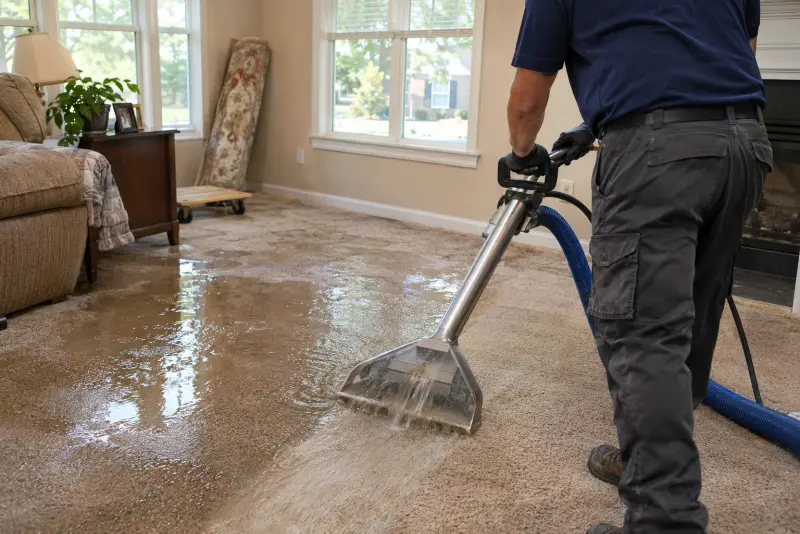
Emergency Water Extraction
Standing water removed before it reaches plaster, trim and stored belongings.
Get help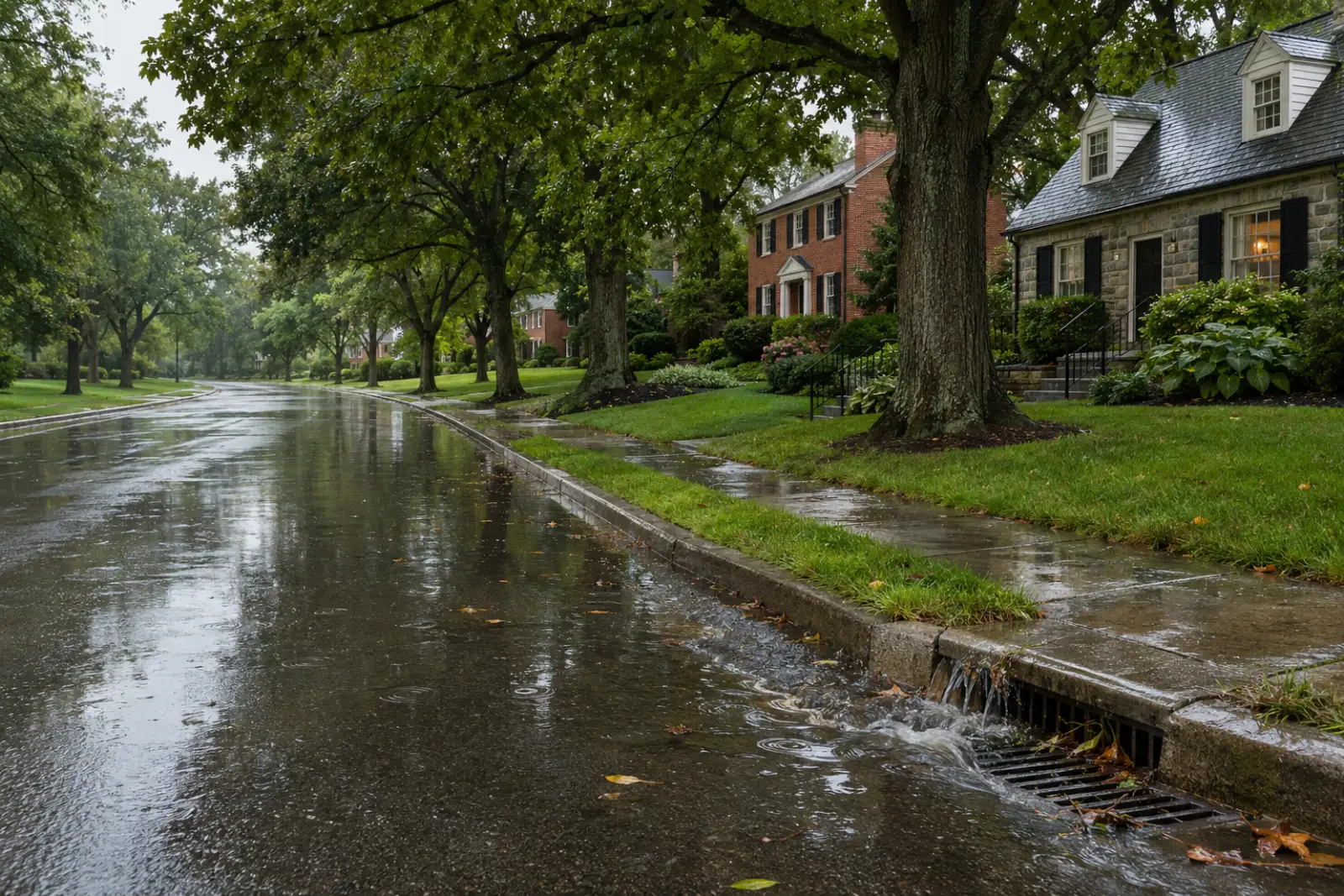
Duquesne is a river city of narrow lots and older homes climbing the hill from the Monongahela. Age and slope decide how water gets in.
Call (412) 555-0142 Or see how to reach dispatch. Calls are answered 24/7.Duquesne sits on the south bank of the Monongahela, just downriver from McKeesport. Grant Avenue and the older blocks around it hold brick and frame homes built in the early and middle 20th century, close together on small lots that slope toward the river.
That slope sends runoff straight at foundations. Stone and block basements here often have no interior drainage, and the plumbing behind the walls includes galvanized supply pipe and cast iron drains that were new decades ago.
Heavy rain adds a second problem. Older sewer systems can surcharge, and the first place that water appears is the lowest floor drain in the house.
Four failures account for most of the calls we run in Duquesne.
Water running downhill meets the foundation and finds the weakest joint. Stone and block walls weep, and the floor slab can wet from below.
Galvanized supply lines close up with corrosion and fail at fittings. Cast iron drains crack, leak into the floor system and run unnoticed for months.
During a storm the municipal line can fill faster than it drains, pushing wastewater up a basement floor drain or a laundry sink.
Older roofs and clogged gutters spill water down walls and into attics, then through plaster ceilings two rooms away.
The wet spot is rarely where the problem starts. Sorting rain runoff from a pipe leak from a sewer backup comes first, because each one needs a different cleanup.
The same crew handles extraction, drying, contamination cleanup and the repair.
Standing water removed before it reaches plaster, trim and stored belongings.
Get help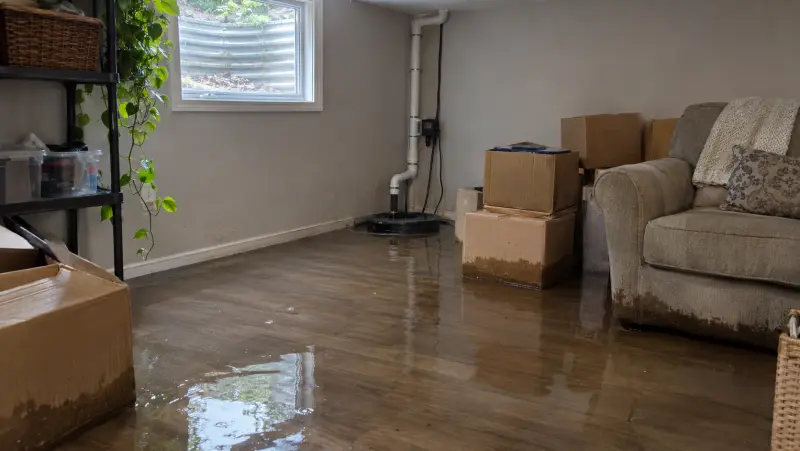
Stone and block basements, hillside seepage and sump failures in older Mon Valley homes.
Get help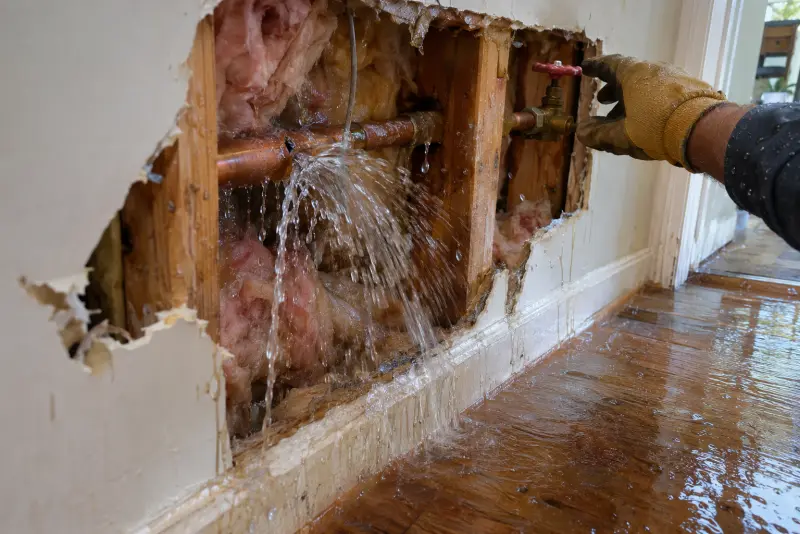
Freeze splits, old galvanized and cast iron failures, and ceiling stains traced to the source.
Get help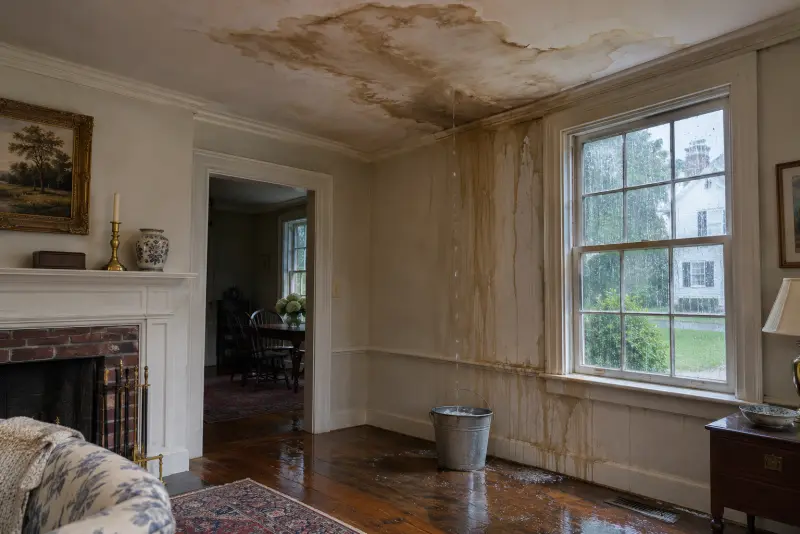
Wind-driven rain, ice dams and ceiling leaks after a storm moves up the river valleys.
Get help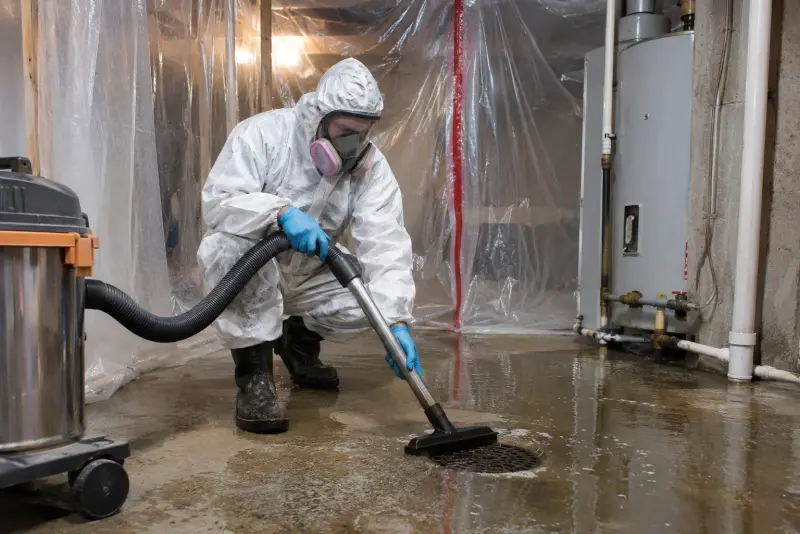
Combined sewer backups handled with containment, PPE and proper disinfection.
Get help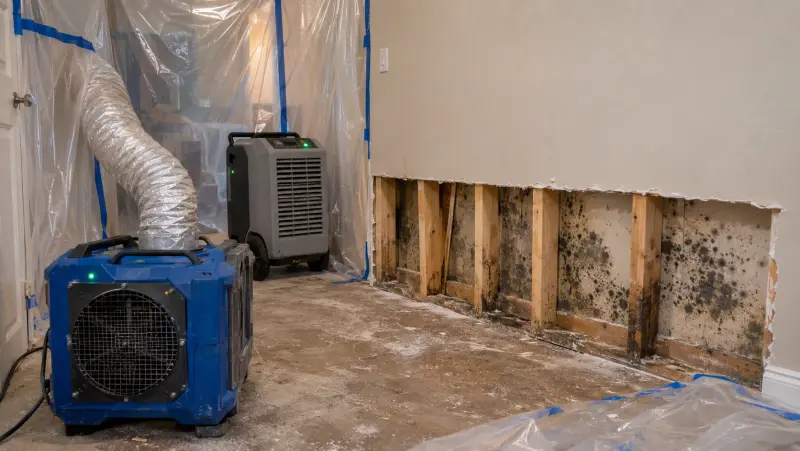
Containment, HEPA filtration and repairs after the structure is dry.
Get helpLocal knowledge matters when the housing stock changes block by block.
15110 · Older commercial blocks and apartments. Flat roofs, aging drains and overnight supply breaks.
15110 · Steep lots above the river. Runoff against foundations and basement seepage after storms.
15110 · Low ground near the Monongahela. High water table and slow-draining basements.
15110 · Dense residential streets. Original plumbing and roofs near the end of their life.
15110 · Homes toward West Mifflin. Sewer surcharge and finished basements.
15110 · Older rowhouses and doubles. Shared walls, shared leaks and plaster ceilings.
These are the signs that usually justify a moisture inspection rather than a wait-and-see approach.
Send a photo or describe what changed. We will tell you whether it needs a visit today.
Call now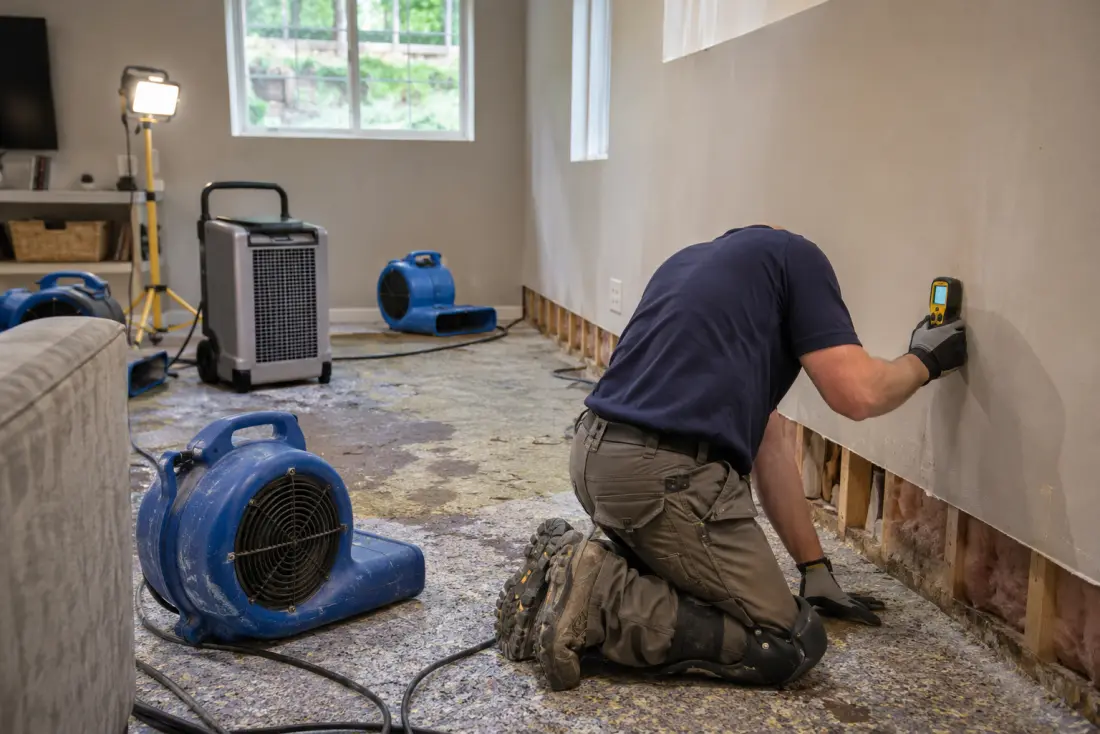
No mystery, no pressure. Here is the sequence from the first call to the final reading.
We confirm the address, the source and whether the water is contaminated. You get safety guidance before the crew leaves.
Moisture meters and thermal imaging map the affected area. We photograph materials and record readings.
Standing water is extracted. Saturated carpet, pad and material that cannot dry in place are removed and documented.
Equipment is sized to the space and checked daily. Drying continues until readings meet the dry standard.
Drywall, trim, flooring and paint are scoped after drying and insurance review.
We reach Duquesne along the river road from McKeesport, with Grant Avenue, the hillside streets and the neighborhoods toward West Mifflin all a short run.
Narrow streets and steep driveways can limit where equipment parks. Tell dispatch about access and parking before arrival.
Use the map link for the general area. For a crew response, call and give the exact address, gate code and any access notes.
Open area mapLocal answers, not a national script.
Usually. We check the wall, the floor joint, the drain and the downspouts to find the entry point, then dry the space. Permanent fixes such as grading or waterproofing belong to a contractor, and we document the damage for them.
Yes. Shared walls mean a leak can cross a property line, so we check the neighboring wall and coordinate access with the other owner when needed.
Often only with a specific endorsement. Check your policy and ask your carrier. We document the loss either way.
Request service
Call for active water, estimates, scheduling and questions. If water is near outlets, a panel or a gas appliance, leave the area and call from a safe place.
One call gets you shutoff guidance, an arrival window and a plan for Duquesne. Have your address and any insurance claim number ready.
Call (412) 555-0142Tap to call from your phone.
Call now. We will tell you what to shut off, what to move and what to leave alone until the crew arrives.
Call (412) 555-0142