
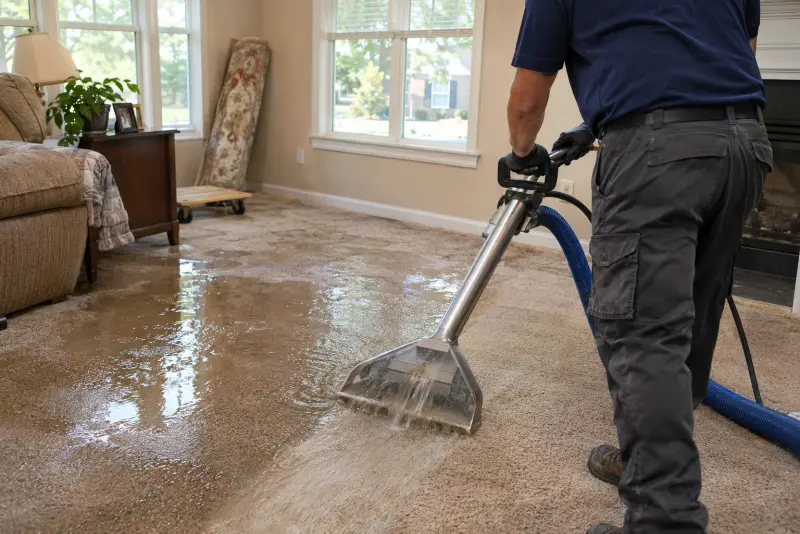
Emergency Water Extraction
Standing water removed before it reaches plaster, trim and stored belongings.
Get help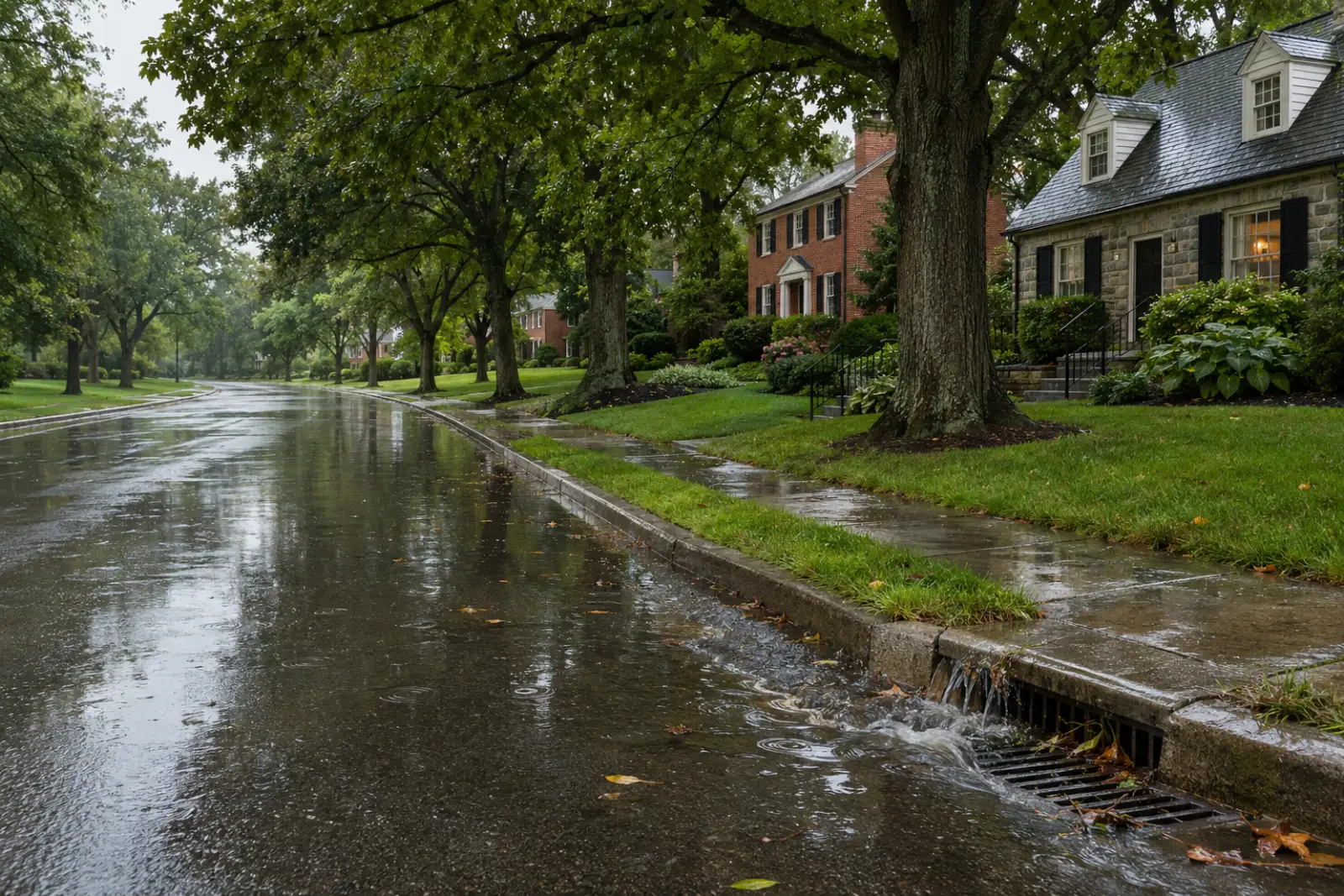
Clairton is a hillside city on the Monongahela. Its homes are older, its streets are steep, and water goes where gravity sends it.
Call (412) 555-0142 Or see how to reach dispatch. Calls are answered 24/7.Clairton lies south of McKeesport on the Monongahela, built in tiers up from the river. Miller Avenue and the older core hold brick and frame homes built for steelworkers, with narrow lots and small yards that offer little room for runoff.
Steep lots mean water arrives with speed. After a heavy storm, runoff pours down the hill and pools against foundation walls, and basement floor drains back up when the sewer system cannot keep pace.
Older plumbing is the other half of the picture. Galvanized lines and original cast iron drains fail at joints, and a slow leak inside a plaster wall can run for a long time before a stain shows.
Four patterns account for most of our Clairton work.
Water running down a steep street meets a foundation and looks for a way in. Stone and block walls let it through at mortar joints.
Galvanized pipe closes from the inside and cast iron cracks. Leaks run inside walls and floors before they surface.
Pipes in exterior walls, porches and unheated corners split when the temperature drops, and the water runs until someone finds the valve.
Large storms can overwhelm aging sewer lines and push wastewater up through a basement drain.
The first job is to separate clean water from contaminated water. The cleanup, the equipment and the risk are different for each, and the sorting happens before anything is torn out.
The same crew handles extraction, drying, contamination cleanup and the repair.
Standing water removed before it reaches plaster, trim and stored belongings.
Get help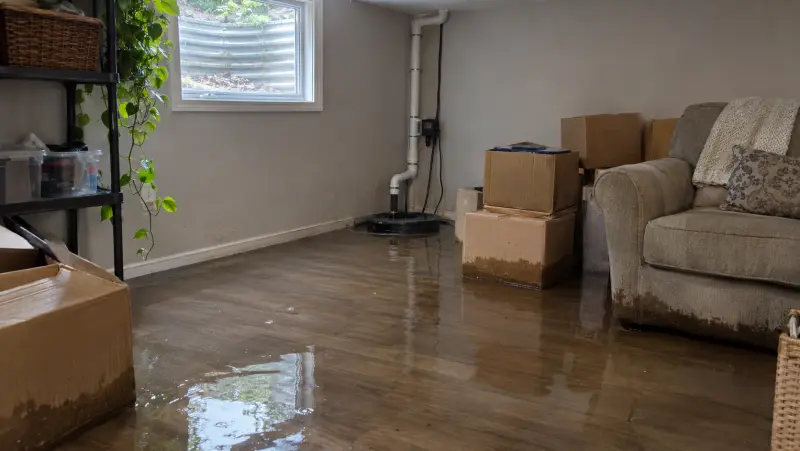
Stone and block basements, hillside seepage and sump failures in older Mon Valley homes.
Get help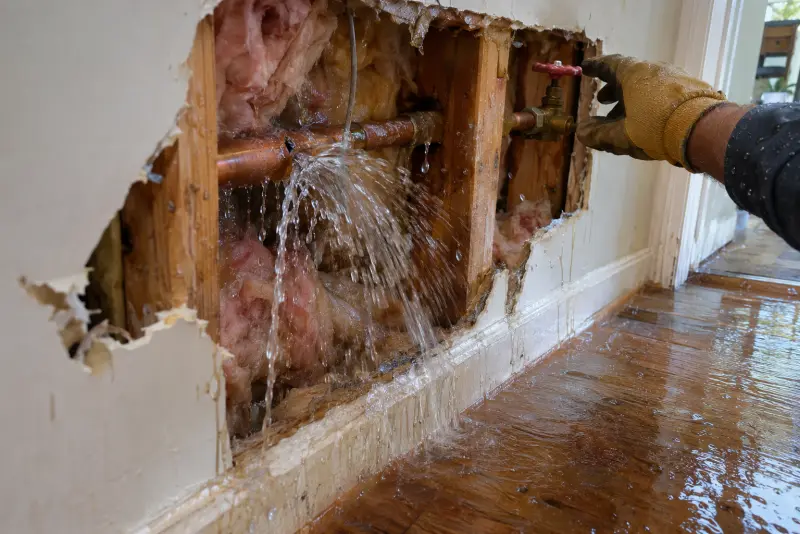
Freeze splits, old galvanized and cast iron failures, and ceiling stains traced to the source.
Get help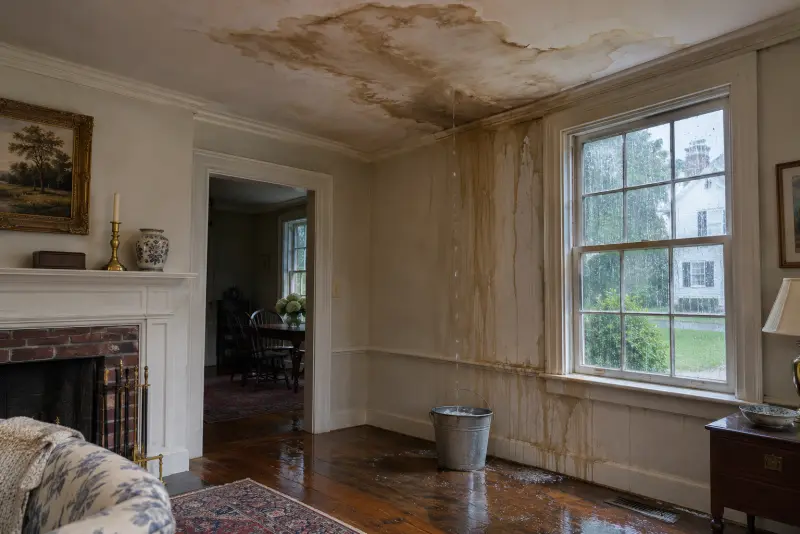
Wind-driven rain, ice dams and ceiling leaks after a storm moves up the river valleys.
Get help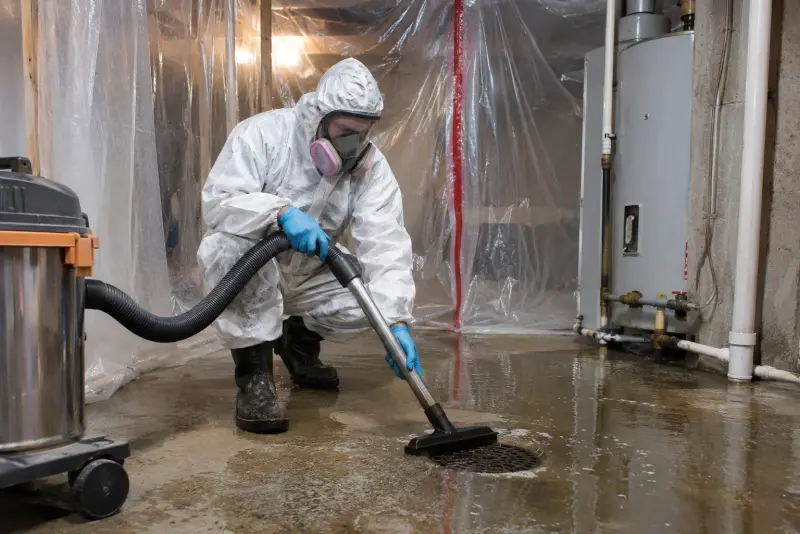
Combined sewer backups handled with containment, PPE and proper disinfection.
Get help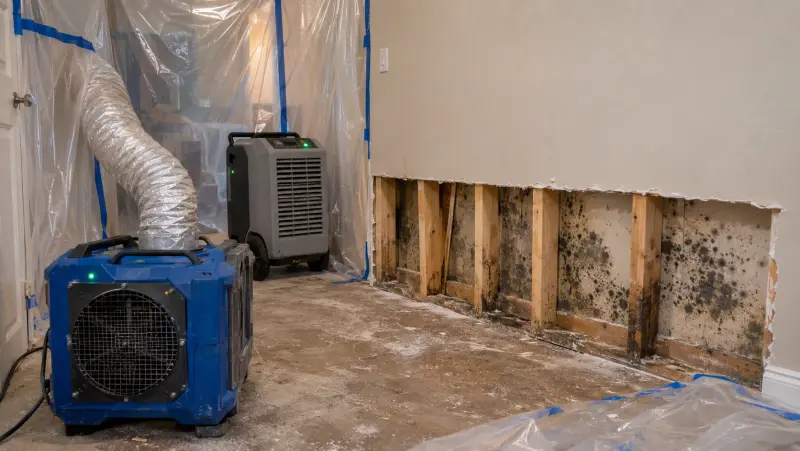
Containment, HEPA filtration and repairs after the structure is dry.
Get helpLocal knowledge matters when the housing stock changes block by block.
15025 · Older commercial and residential blocks. Aging drains and plaster ceilings.
15025 · Steep streets above the river. Runoff against foundations and stone basement seepage.
15025 · Low ground near the Monongahela. High water tables and slow-draining basements.
15025 · Homes toward the borough line. Frozen exterior-wall pipes and roof leaks.
15025 · Residential streets with older doubles. Shared walls and shared leaks.
15025 · Homes on the higher ground. Wind-driven rain and attic leaks.
These are the signs that usually justify a moisture inspection rather than a wait-and-see approach.
Send a photo or describe what changed. We will tell you whether it needs a visit today.
Call now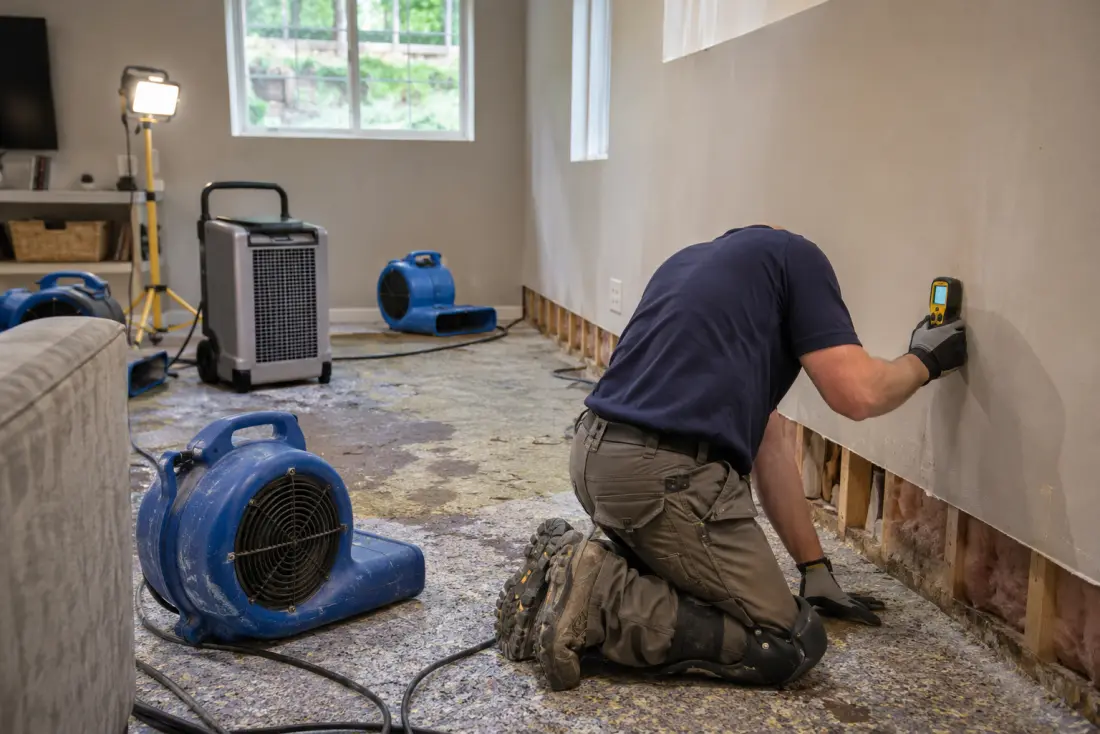
No mystery, no pressure. Here is the sequence from the first call to the final reading.
We confirm the address, the source and whether the water is contaminated. You get safety guidance before the crew leaves.
Moisture meters and thermal imaging map the affected area. We photograph materials and record readings.
Standing water is extracted. Saturated carpet, pad and material that cannot dry in place are removed and documented.
Equipment is sized to the space and checked daily. Drying continues until readings meet the dry standard.
Drywall, trim, flooring and paint are scoped after drying and insurance review.
We reach Clairton along the river road from McKeesport, with Miller Avenue, the hillside streets and the neighborhoods toward the borough line all a short run.
Steep, narrow streets limit where trucks can park. Tell dispatch your street and any access limits before the crew leaves.
Use the map link for the general area. For a crew response, call and give the exact address, gate code and any access notes.
Open area mapLocal answers, not a national script.
Yes. Stone dries more slowly than drywall, so we use dehumidification and airflow and monitor it daily. We stay until the readings meet a dry standard.
Usually. Timing, location and moisture patterns point to the source. Pressure testing and thermal imaging confirm it before we open walls.
Yes. We contain the area, remove porous material that touched the water, disinfect hard surfaces and verify dryness before reconstruction.
Request service
Call for active water, estimates, scheduling and questions. If water is near outlets, a panel or a gas appliance, leave the area and call from a safe place.
One call gets you shutoff guidance, an arrival window and a plan for Clairton. Have your address and any insurance claim number ready.
Call (412) 555-0142Tap to call from your phone.
Call now. We will tell you what to shut off, what to move and what to leave alone until the crew arrives.
Call (412) 555-0142